Celebrating the service of military dogs this Anzac Day

Remembering the special pups that served alongside our service men and women 

Every year, we reflect on and commemorate the brave actions of the Anzac soldiers that fought in numerous wars. This year, Assistance Dogs Australia (ADA) would like to especially acknowledge the roles of military dogs and the life-saving service they provided to the soldiers they worked alongside.   

Dogs routinely supported Anzacs by undertaking various tasks depending on the dog’s aptitude. Delivering messages and supplies, detecting mines, helping keep trenches rat-free, getting food or water to fallen soldiers in No-Man’s Land and even signalling approaching enemy aircraft (up to 20 minutes before humans could hear them coming!), dogs have proven to be instrumental in times of conflict.  

Congratulations to the Border Collie! Australians love this breed for their energy, working drive, and high intelligence.

Border Collies have won hearts all over the world for being athletic and highly trainable dogs who were bred to herd animals.

All dogs are amazing, but Border Collies have an exceptional place in our hearts and homes.

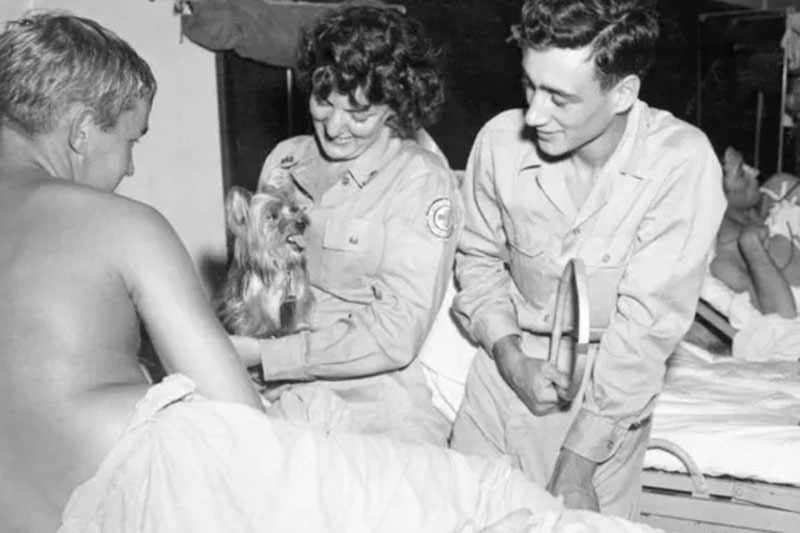
Not only did they provide practical support to their human comrades, dogs also provided important companionship. Smoky, for example, a tiny Yorkshire Terrier who could easily fit inside a soldier’s helmet, served in WW2 helping lay communications wires in minutes. Alone, it would have taken soldiers days. In the US 233rd Field Hospital, Smoky slept alongside her owner, Corporal Bill Wynne, who became ill with Dengue fever. Nurses noticed how her presence (while not strictly allowed!) lifted the spirits of other patients, and soon they were borrowing Smoky for their rounds to spread comfort and cheer to other soldiers affected by war.  

On leave in Brisbane, Corporal Wynne was invited to visit the US Navy 109th Fleet Hospital and the US Army 42nd General Hospital to cheer patients up by showing off Smoky and her growing list of tricks.  

Smoky is Australia’s first documented therapy dog, paving the way for a global movement that recognised the significance of dogs in improving human health and wellbeing.  

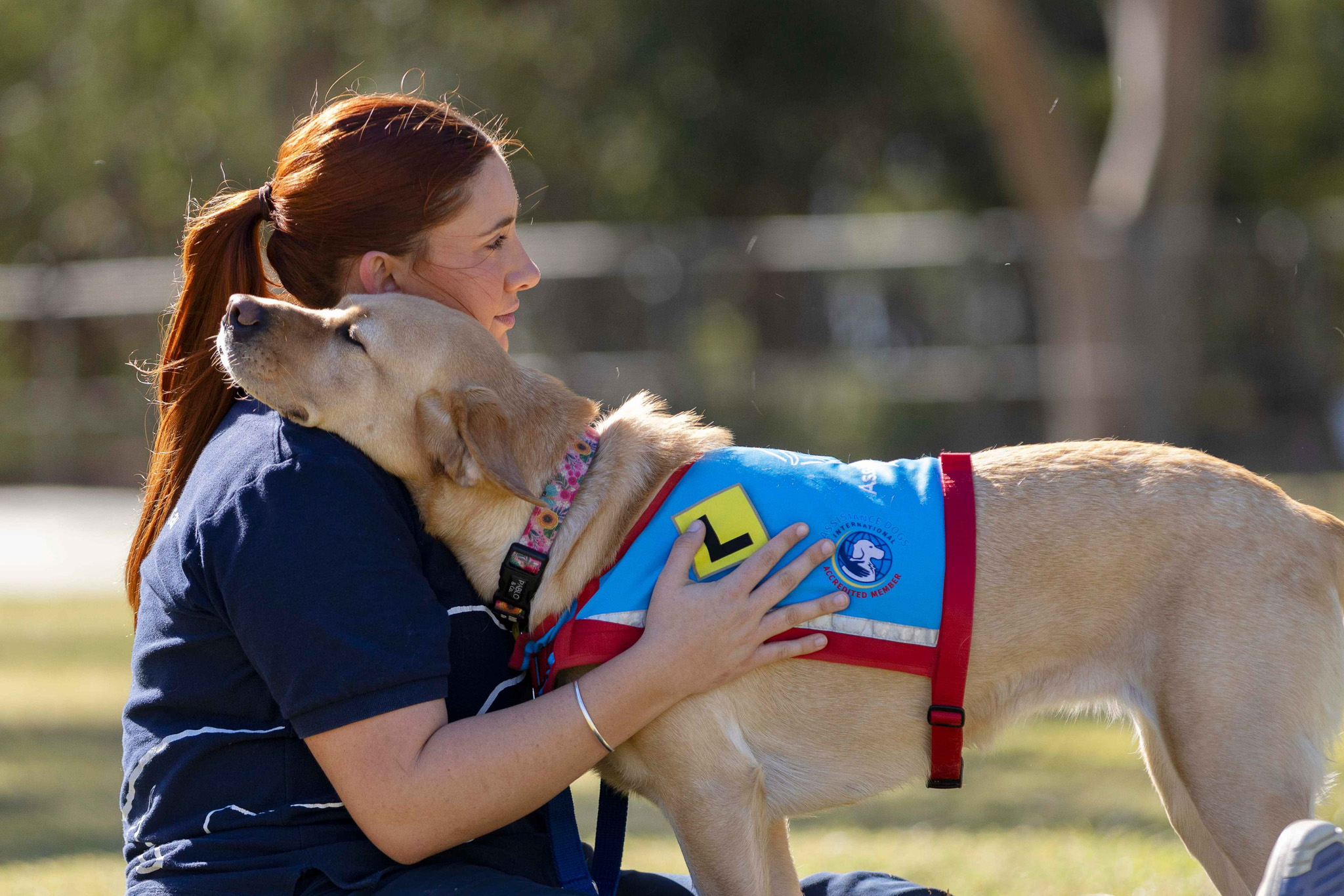
These Anzac stories serve to remind us of the incredible impact dogs make to our lives. The work we do at ADA serves not only to provide physical assistance for our clients, but to provide the essential emotional support that so often is taken for granted. ADA proudly supports many clients who require the services of a PTS Assistance Dog following their years of service in the Australian Defence Community. We are deeply committed to serving veterans with post-traumatic stress and recognise the profound effect dogs can have on an individual’s wellbeing. 

Thank you for your ongoing support to help raise and train Assistance Dogs to empower connection, inclusion and independence for people with disability. 

Messenger dogs, 1918

Corporal James Coull with three messenger dogs Nell, Trick and Buller (sometimes known as Bullet) in a railway cutting near Villers-Bretonneux, France. The dogs saw service with the 2nd, 4th and 5th Australian Divisions. Trick was particularly efficient at delivering messages and was well known to the Australian and British brigades in the area. Image: Australian War Memorial

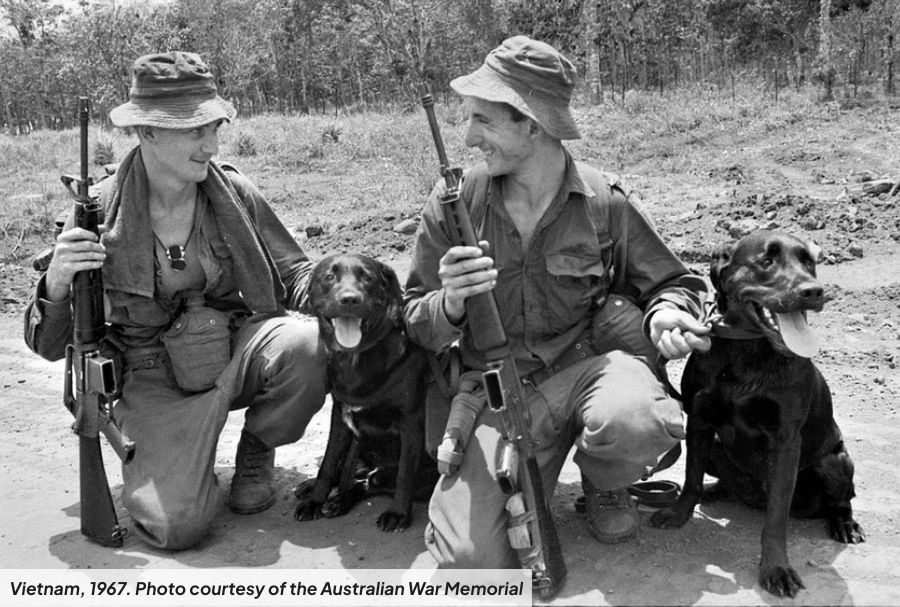
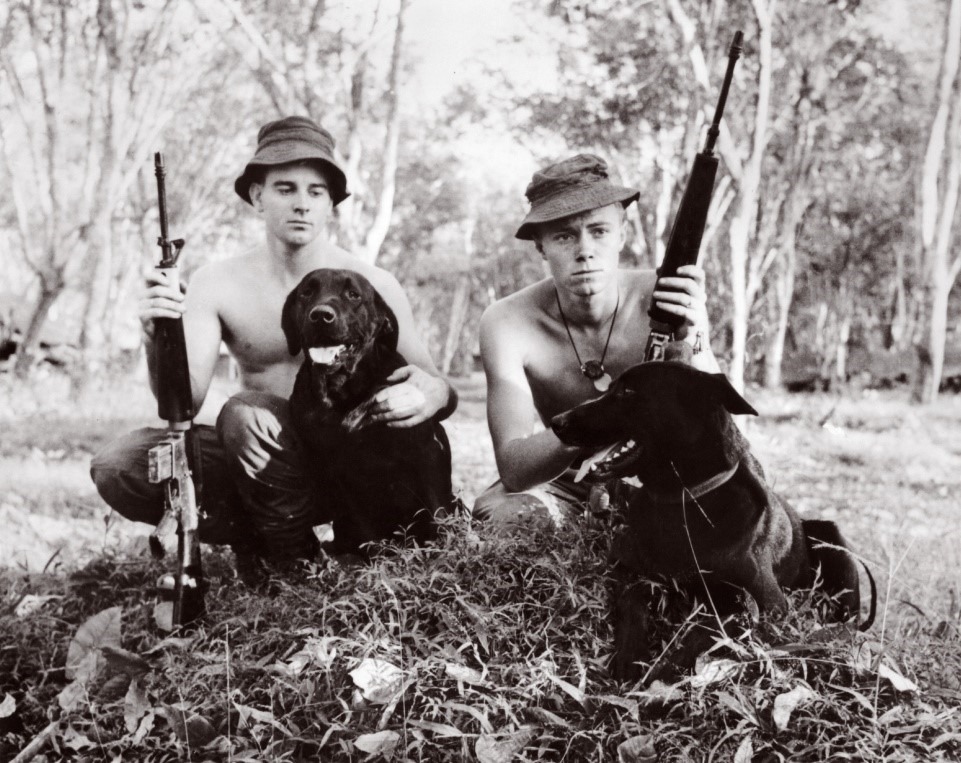
Tiber the tracker dog

Tiber with his handler, Lance Corporal Norm Cameron, 1967. Tiber was one of 11 tracker dogs that served with Australian forces in Vietnam. Two black labradors were assigned to each battalion to make up a tracker team. One year into his tour, Tiber broke free from his handler after a grenade exploded just metres from him and disappeared towards where Australian shells were falling. He ‘slunk back into Australian lines’ in the late morning the following day and was soon retired to Australian Embassy workers in Saigon after being deemed unfit to continue working. Image: Australian War Memorial
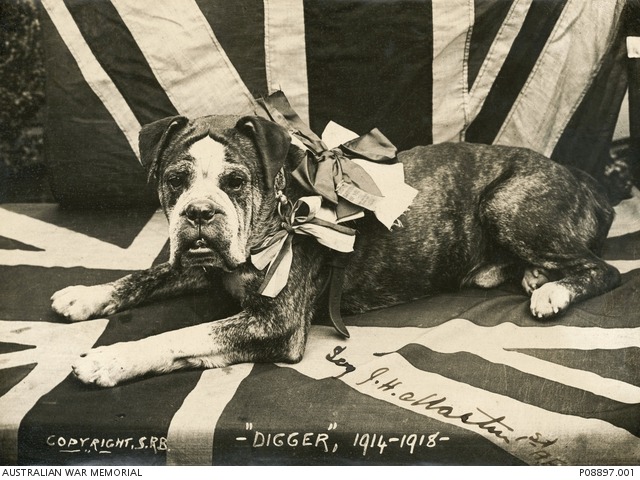
Digger the WWI dog

Digger was a stray dog who became the mascot for Sergeant James Harold Martin’s company in the Australian Imperial Force during World War I. He accompanied Martin and his unit to Gallipoli and the Western Front, participated in over 16 “over the top” attacks. Digger survived being shot through the jaw, gassed, burnt, blinded in one eye, and became deaf one ear. Despite his injuries, he continued to serve, bringing food to wounded men and sometimes returning with messages. He retired in Australia but continued to support war efforts and marches and ceremonies. He was Australia’s first Blue Cross Award recipient. Image: Australian War Memorial

Our latest news and stories