With more and more canine helpers out and about in the world, some of the terminology can get a bit confusing. You may have heard these words get thrown around interchangeably.
So what is the difference between Assistance Dogs and Emotional Support Dogs?
In short: the law!
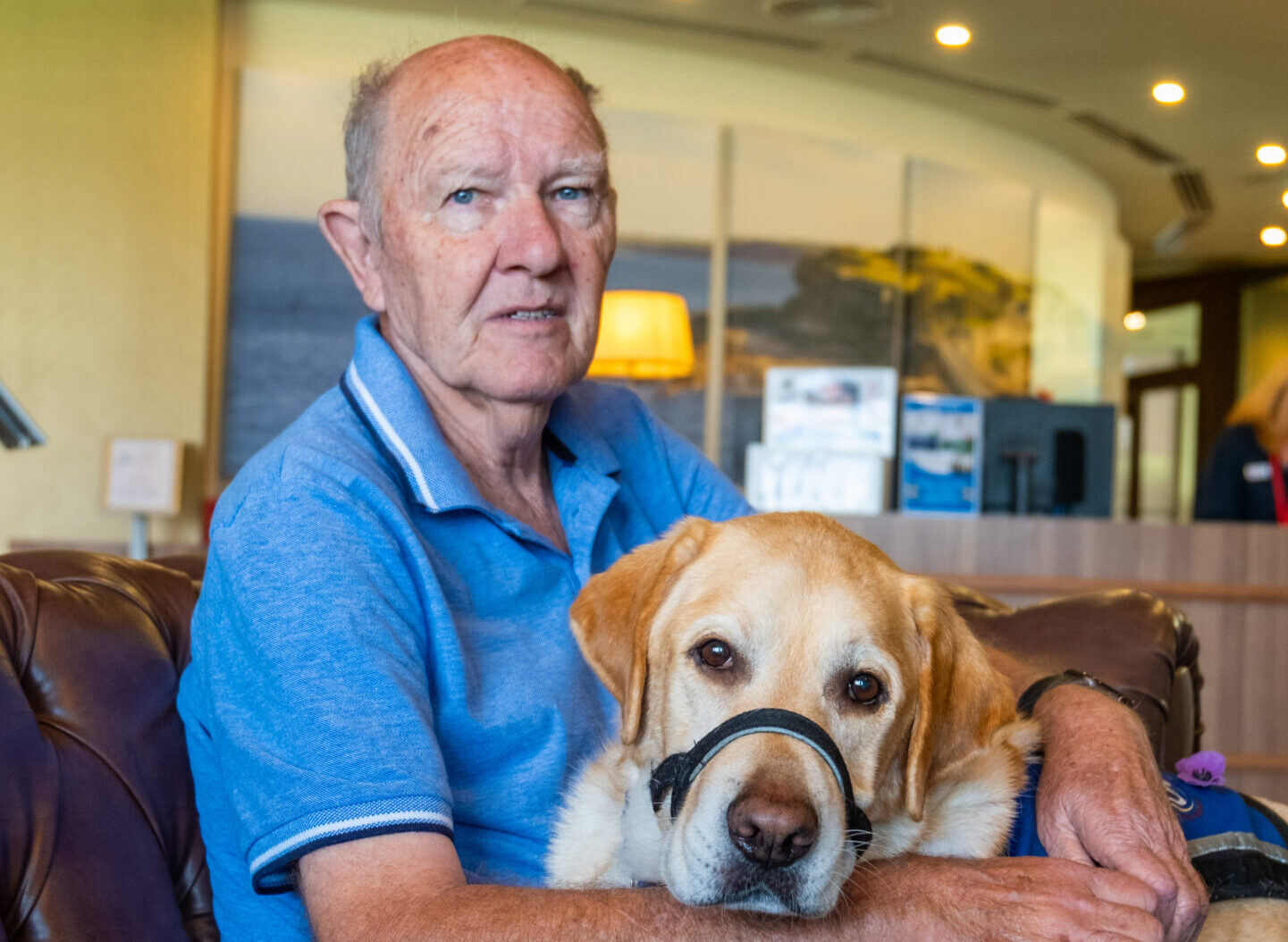
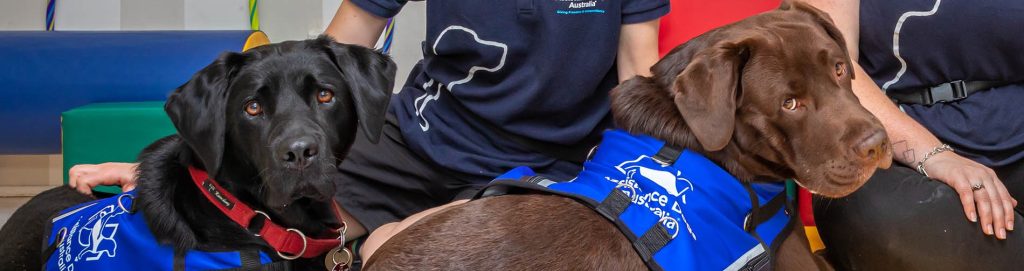
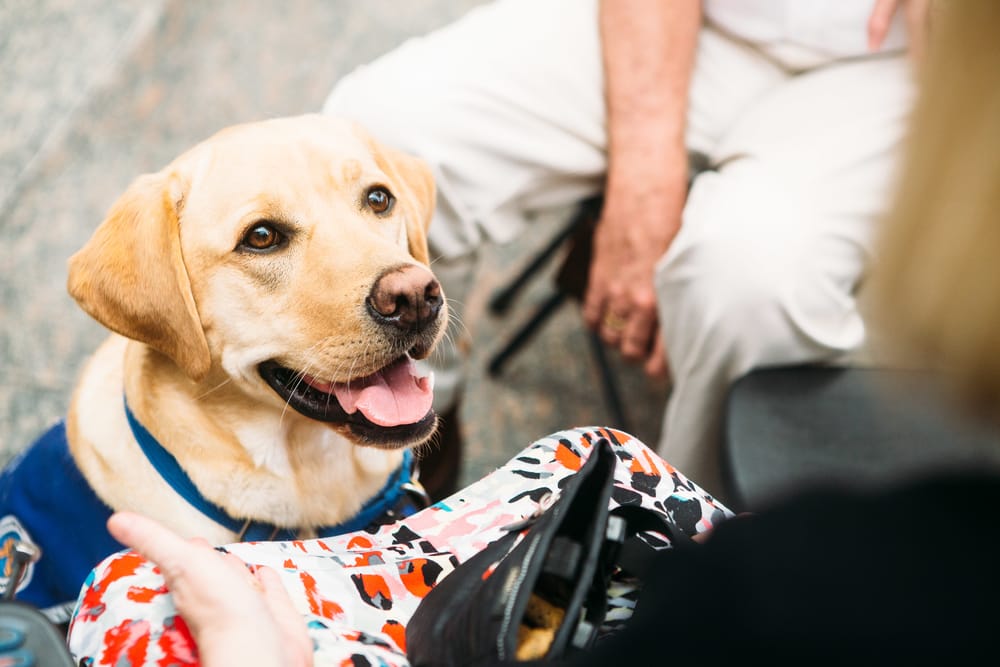
Assistance Dogs are medical aids, whereas Emotional Support Dogs are considered pets. While all pet dogs (and pets in general) can make us feel better, give us unconditional love, and improve our overall quality of life, it takes years of training to become an Assistance Dog.
What does the law say about Assistance Dogs Vs Emotional Support Dogs?
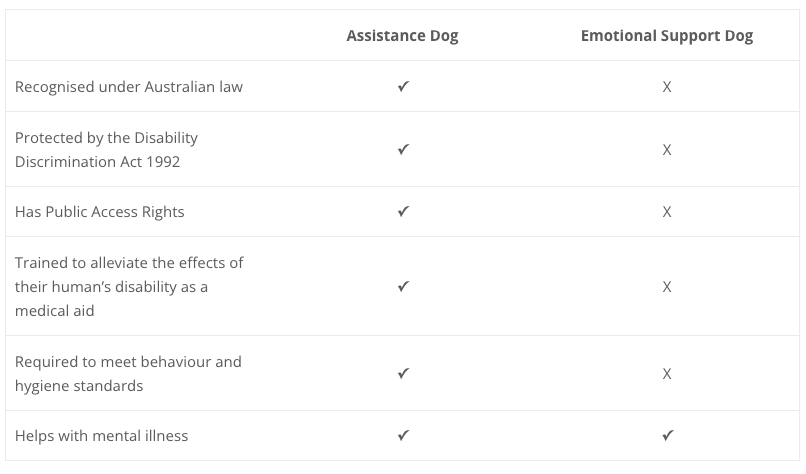
Emotional Support Dogs are not recognised by law. There is no set standard or accreditation process to qualify an Emotional Support Dog. They do not have public access rights and are not protected by disability anti-discrimination laws if they and their owner are refused entry to a venue.
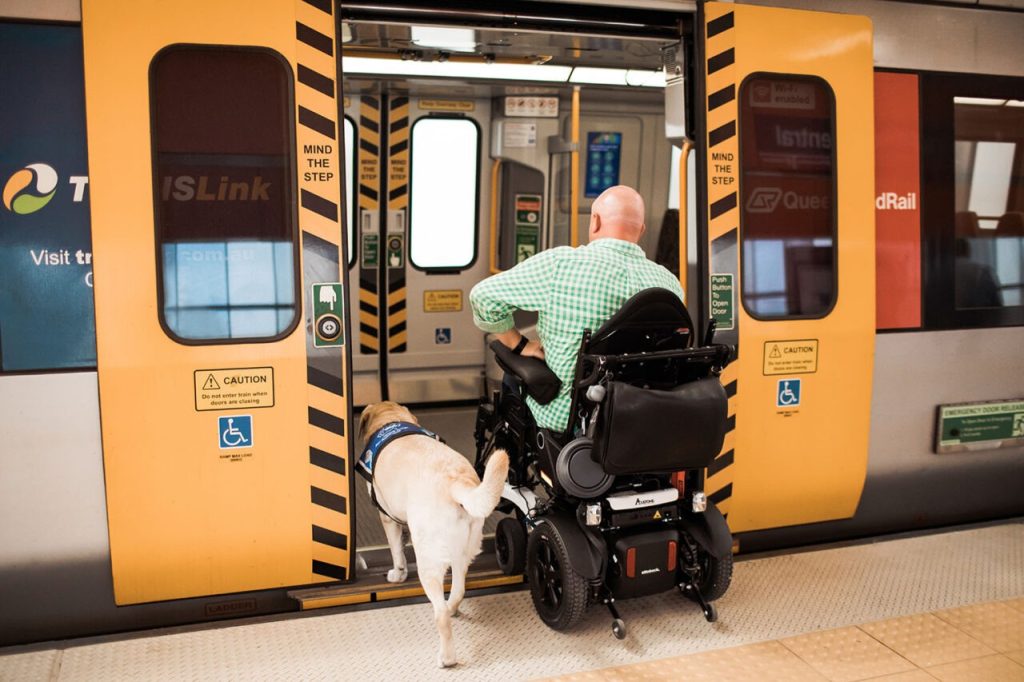
By contrast, Assistance Dogs are granted full Public Access Rights, allowing them to accompany their human almost everywhere. Public Access Rights are granted only after thorough assessment, completed by accredited organisations, and must be re-issued yearly. These rights are protected under Federal Law via the Disability Discrimination Act 1992.
As outlined by in the DDA, these dogs might help with physical conditions (like vision impairment, mobility and dexterity issues, or alert their owner of an oncoming seizure), or psychosocial difficulties (such as trauma, Autism Spectrum Disorder, or panic).
Every year, Assistance Dogs undergo an examination, called the Public Access Test, which essentially re-accredits them to go everywhere with their human (except for sterile areas like operating theatres).
Why are public access rights given to Assistance Dogs but not Emotional Support Dogs?
It all comes down to training. Assistance Dogs, in addition to their supporter skills, have been trained to meet a very high standard of behaviour and hygiene. Their handlers are also trained to help them maintain their skills.
For example, Assistance Dogs are trained to toilet on command and not in indoor or public spaces. On public transport, Assistance Dogs know how to position themselves out of the way and to remain so quiet, no-one would know they are there.
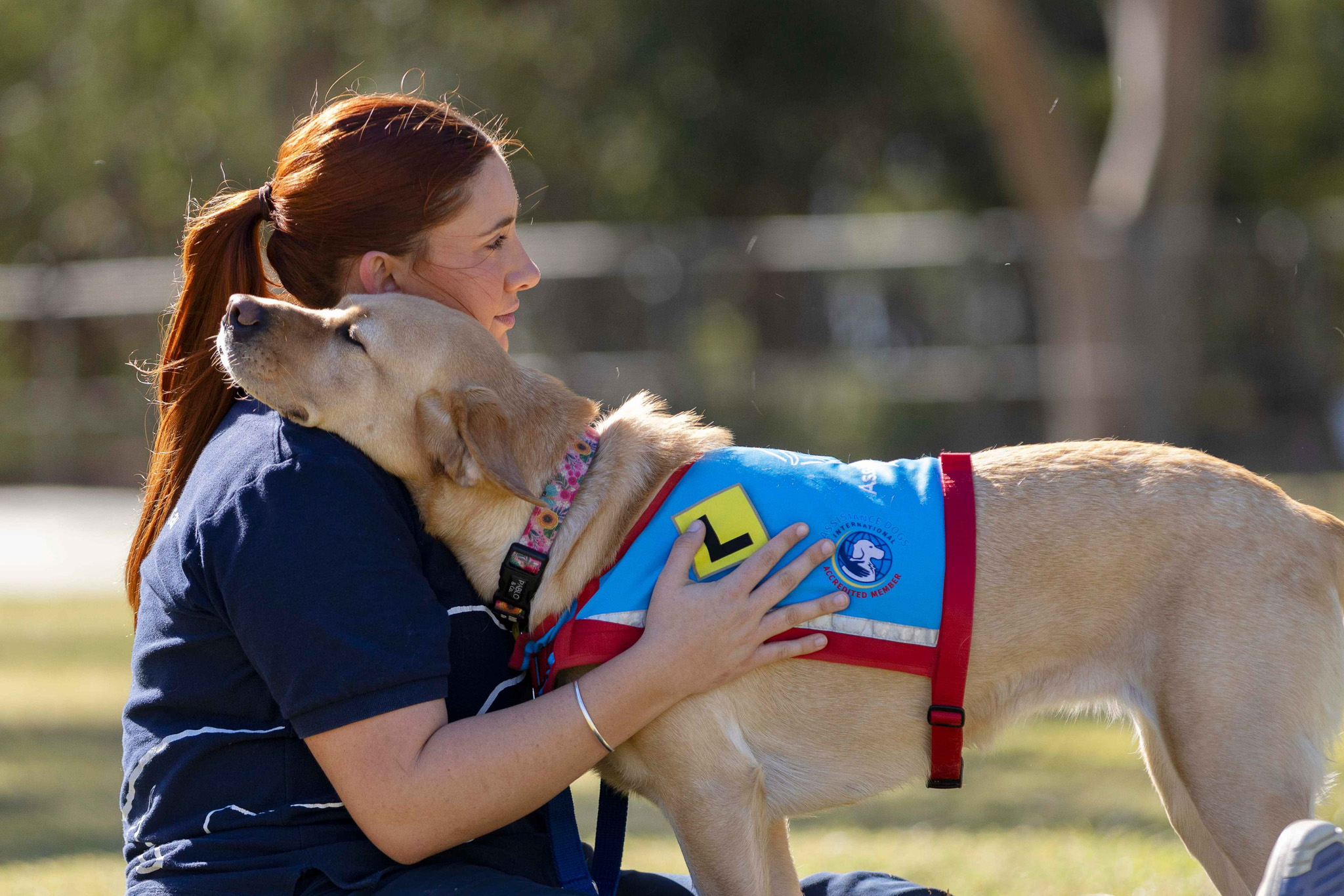
We love all dogs equally, but Assistance Dogs are trained to the highest standards and have accreditation that is renewed every year.
At a glance guide to the difference between Assistance Dogs and Emotional Support Dogs: